
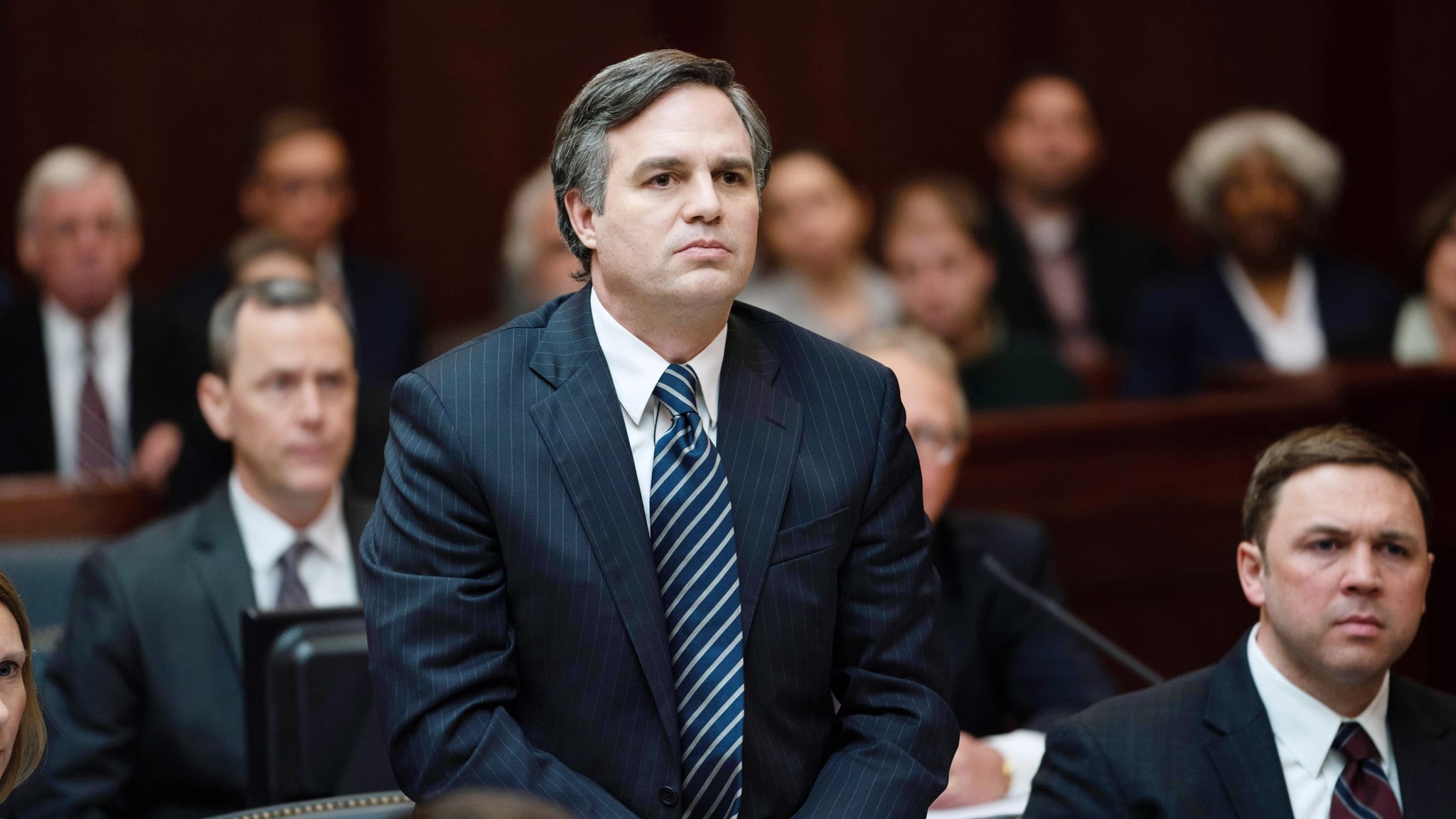
Dark Waters, a movie based on the true story of a lawyer who successfully sued an American icon, follows admirably in the footsteps of countless other ‘legal conspiracy’ films – those films where a lone, seemingly misunderstood man sees and knows something others don’t and develops a maniacal need to get to the bottom of it. This film hits most of those satisfying beats and has its own brooding atmosphere to boot, and while it isn’t perhaps a classic in this genre, it is a mostly enthralling tale of persistence in the face of corporate greed.
Frankly, if you watched the trailer for Dark Waters you know just about its entire story. Mark Ruffalo plays Robert Billot, a recently-made partner of a large law firm who specialises in environmental law. Billot is a corporate defence attorney, used to the rigours of negotiating settlements with “little people” screwed over by big business. He comes across as a humble, intelligent individual who knows nothing else but his work. He’s a cog in the machine.
That all changes when he meets a drawling farmer from his hometown of Petersburg, West Virginia. While the farmer’s claims surrounding the pollution of his stock at first appear a bit odd, they quickly become convincing, and it’s entirely believable that an intelligent man like Billot might be swayed by his evidence.
Ruffalo unsurprisingly plays this character well and very convincingly. Always an understated, warm actor, his soft-spoken nature meshes well with Billot’s character. Characters in these types of movies are often constantly prodding and poking, acting as a trumpeting thorn in the side of big business. Ruffalo eventually morphs into that character, but it feels organic and more the product of the atrocities he witnesses rather than an inherent element to Billot himself. He is fighting his own (and his family’s) voice which is telling him to let this go. It’s believable that one lawyer would have looked the other way, but it’s equally believable that another wouldn’t. Ruffalo’s portrayal of this character adds authenticity to the story, rather than a Hollywoodness to it. He’s excellent.
But Dark Waters suffers from a lot of the same issues that plague these sorts of movies. For one, the supporting characters around Billot don’t feel firmly placed. Anne Hathaway does the best she can as Billot’s wife, but she’s more an anchor than a real character even if her life as a former lawyer (and the sexist divide of the time) is hinted at. Similarly, Tim Robbins’ character occupies an interesting position as the managing partner of Billot’s firm, but he never pans out as anything more than another (admittedly conflicted) obstacle in Billot’s path. Bill Pullman feels grossly underutilised. Ultimately, it’s the plot behind the characters that holds the true intrigue.
Therein lies the other problem. The story behind Rob Billot vs DuPont Industries is no doubt fascinating, but it feels as if plot points are drummed up to add heightened suspense. There are a couple of scenes hinting at ‘life or death’ moments (a scene where Billot nervously turns the key in his ignition; another where a house is torched) which feel more like melodramatic fodder than real-life depictions. Further, just when you think the film is hitting its straps halfway through, the film meanders as the case becomes beholden by legal process, and feels more like it crawls to its finish rather than soaring. Perhaps a stronger focus on the intensity of the trials themselves might have added more suspense. The lone scene where the parties log heads and Pullman can stretch his legs a little is one of the best of the film.
Ultimately, this is a satisfying and harrowingly true film. It’s easy to see how Ruffalo, who also produced the movie, fell in love with its lead character and the story behind him. Dark Waters might not be the greatest of these genre films, but it’s an oft-captivating one all the same.
 THE MIDNIGHT SPECIAL