
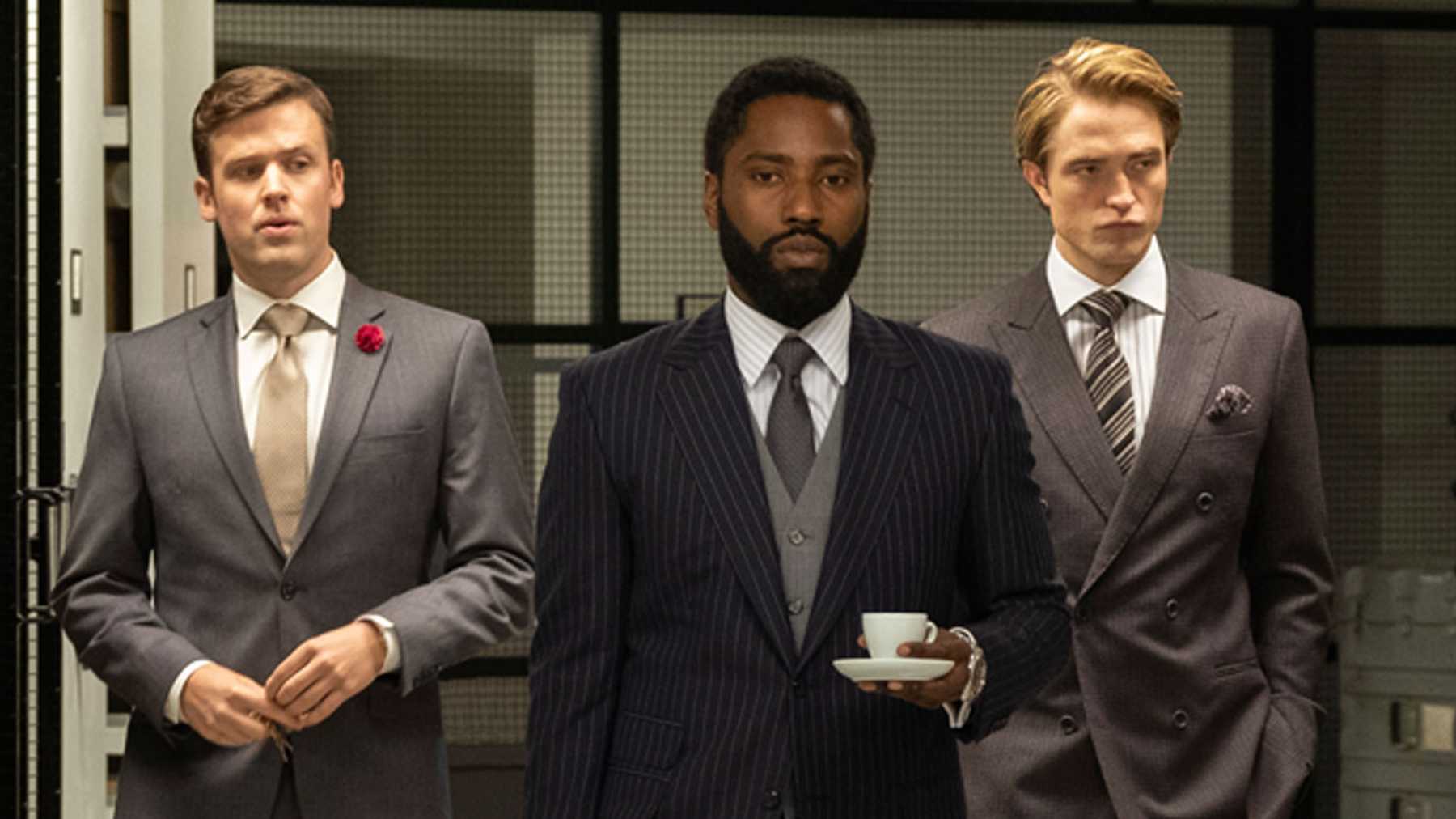
Watching Tenet is like playing a game of chess. Except you’re playing it in reverse. And halfway through you’re told it’s not chess. And someone starts explaining completely different rules, that you’ve never heard of, but explains them in a way that they seem to think is obvious and you’re too embarrassed to do anything but nod. You will not understand Tenet the first time you see it. There is simply too much to process in such little time. At one stage the protagonist is told to try not to think about the contorted time-travel concepts being thrown at him. That’s a bit harder for the audience; when almost the entire movie feels like a vomit of exposition about what is going on and why.
A key issue with Tenet comes early. After a heart-racing action scene in an opera theatre and a quick introduction to our protagonist (played by a very smooth John David Washington) we are introduced to concept behind this all-concept film by a scientist, calling it “inversion“. This scene is clearly designed to outline the film’s rules to the audience. But it’s not done well. You leave that scene more confused than when you entered it. That would be fine if the film simply jumped off from there and didn’t worry too much about the concepts being teased out. But it does. That key concept is repeated, added on, extrapolated and discussed between characters over and over. But it’s often frustrating more than gratifying to watch because it’s never really clear what the “science” of the film is, or even what the film expects us to understand.
So, does that make Tenet a failure? No. There is too much promise in the movie. The time-travel concepts (which, for everyone’s sake, we will not get into here) are deliberately scrambled. There are loose ends everywhere. That is a hurdle every time-travel movie runs into. But if you are paying attention, some of those ends come together, and there is a real satisfaction in figuring out how pieces are sliding into place only a couple beats after the characters do. The director, Christopher Nolan, has plenty of fun showing the viewer a scene which he knows they will not understand at that time, and then bringing them back to it in an “aha” moment. Two great examples – an early scene where the protagonists fight two masked men in reverse; and another where the past and the present stare directly at each other in brightly-lit blue and red corridors. The cinematography in this movie is fantastic and doesn’t feel overly indebted to CGI. This is big-budget filmmaking that Nolan is very familiar with.
Problems start arising elsewhere though. For one, none of the characters involved in this film really get anything to chew on with their roles. That is particularly shameful when John David Washington and Robert Pattinson are the leads. Washington gets plenty of screen-time but he is really just the plot vehicle. He gets brief moments to showcase some cheekiness in his lines and needed humour but they are few and far between and it only reinforces how wasted his talent is. Pattinson’s use is arguably even more egregious. He’s charming here, but given the fascinating roles he’s recently played, he’s disappointingly under-utilised. Perhaps worst of all is Elizabeth Debicki, playing a love interest and obvious MacGuffin. Her character is painful and her chemistry with Washington is non-existent, despite the film trying to convince us that he would put the world at stake for her wellbeing. It feels as if Nolan knew there had to be an entangled love interest because every major blockbuster has one. Similarly, the villain’s motivations are near-comical. This film would have been better sticking to the concept, hand-holding the viewer a bit, and deriving all its joy out of that. Instead, we get characters that we’re told to care about but who don’t feel very real at all.
But Tenet is simply too big to fail. There’s too much going on. And even if the ideas behind it are frustratingly difficult to follow, they are intriguing. Days later, you’ll still be thinking about scenes and what they meant and how they evolved. The chess pieces start to take shape. It just leaves you wondering – is that a fun way to play?
7.9
 THE MIDNIGHT SPECIAL