
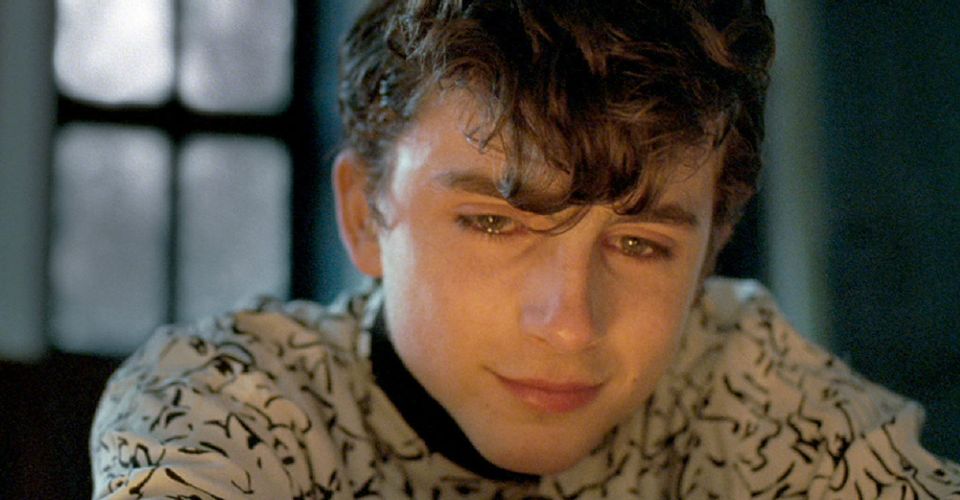
Few present-day movies are as self-indulgent as Luca Guadagnino’s Call Me By Your Name. Set in a beautifully nostalgic 1980s Italy, this film feels extracted from another era. Based on the novel by André Aciman, it is an exploration in anguished love. A torture of the soul. It is at once beautiful and almost haunting, anchored by two of the greatest lead performances in recent memory, no qualifiers needed.
9.3
It almost feels wrong to speak of CMBYN‘s story. It is leafy thin. We are immediately dropped into the life of Elio (Timothee Chalamet), the son of a Jewish family living in Italy who appear to be impossibly progressive and living a surreally picturesque life in a quiet Northern Italian town. Elio’s father (Michael Stuhlbarg) brings on Oliver (Armie Hammer) as a graduate student to live with them. Slowly, something seems to be brewing between Elio and Oliver, or it might only be Elio who is doing the brewing – we struggle to tell at times.
This film is all and only about the relationship between Elio and Oliver. But Guadagnino understands that therein lies endless material. Elio is the pursuer, and he could only be, given if it was the other way around we would immediately see Oliver as a predator. But Elio is tormented by Oliver’s American cowboy laissez–faire approach to life (the film makes a joke out of his abrupt “Later!” every time he leaves the house). Sometimes they appear close, but at other times Elio wonders whether Oliver doesn’t think about him at all. This is beautifully paralleled by Elio’s own relationship with a local French girl. When she asks how he so easily disappears from her sight for a few days, he can only shrug his shoulders.
This is brilliantly drawn out in a protracted scene where Oliver plans a midnight rendezvous with Elio. The camera continuously hovers over Elio’s digital watch through a series of scenes throughout the day. At one stage, while both linger around the dining table, Oliver asks Elio what the time is. But it’s said in such a casual way that we’re convinced he might only truly be wondering about the exact hour. As the viewer, you become as distracted as Elio is, and as desperate to see what will happen when he meets up with Oliver, and if Oliver cares half as much.
Chalamet is nothing short of brilliant in the lead role. He plays Elio as something of a wunderkind, but he also has moments of flamboyance and tenderness. At other times, he’s brooding and charming, and occasionally he’s disarmingly brave and open for a 17 year old. This is not an easy role by any stretch and would have swallowed up a lesser actor. Or, a lesser actor would have only been able to play Elio as the typically shy, reserved boy that would be par for this kind of role. He is a brilliant find.
Similarly, Hammer comes into his own as Oliver. Often hamstrung by roles that play into his brawny, chiseled good looks, here they are used to perfection. He embodies the idyllic post-WWII American man. His cockiness both frustrates and allures Elio. It is in many ways surprising that the relationship between the two of them never feels anything other than organic, but it’s a testament to Hammer’s acting chops that he feels right at home in a film like this.
It might feel trite to say this film is beautiful, but it is the perfect adjective. The cinematography perfectly captures the changing Italian seasons, from the stifling heat surrounded by lush greenery, to the pitter-patter of rain on the old Tuscan house, to a later scene in blanketed white snow. The weather changes as Elio does in this film. Likewise, the original score is gorgeous and does plenty of the work left unsaid by the actors. The film feels authentic to its era yet still grounded in present-day reality. Few films in recent years have utilised both nature and music so effectively that they permeate through the screen and dictate the characters’ mood swings.
It is difficult to fault a film of such beauty. Is it long? Undoubtedly. It feels as long as a hot, humid Italian summer. So it should. This film is about nothing and everything. The anguish of Elio trying to stretch out his forbidden love. Oliver’s tacit acknowledgement that it can’t last forever. In fact, it can’t even last the summer. That all culminates in a painful final 30 minutes in the film, in which we get the two most gut-wrenching scenes. The first features an alarmingly honest discussion between Elio and his father, in a moment that will likely be the highpoint of Stuhlberg’s career. The second lies in the final minutes, which feel inevitable. To watch Elio process them, however inescapable the conclusion feels, is nothing short of painful. A rich reminder of how beautifully cruel life can be.
 THE MIDNIGHT SPECIAL