
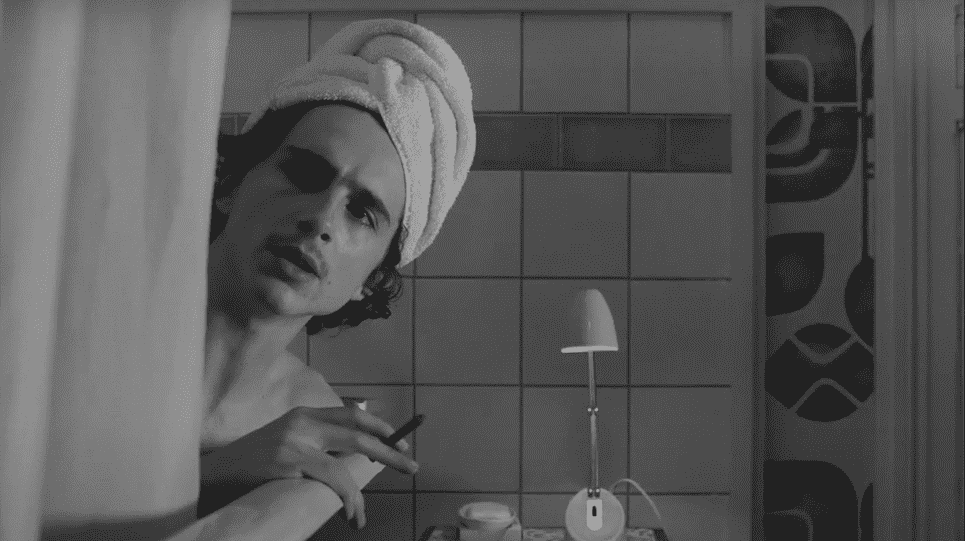
Wes Anderson’s ode to journalism is pure cinema. Each moment impeccably constructed and deliberately framed. It marks the highpoint of one of film’s greatest auteurs. Like Quentin Tarantino’s Once Upon a Time In Hollywood, its creator simply asks you to do one thing – enjoy it.
8.6
In many ways, The French Dispatch feels like Quentin Tarantino’s Once Upon A Time In Hollywood. It represents a film-maker at their most unrestrained. A love letter to their own brilliance. A mark of insouciance. Wes Anderson’s latest feature film is a cinematic joy from beginning to end, featuring an enviable cast. One in which it feels like he picked out each lauded actor or actress like a child at a confectionary store with too much time on his hands. This film is gorgeous in every sense.
It begins with a swift introduction – The French Dispatch is a magazine (a la The New Yorker) headlined by a group of eclectic writers, championed by their editor-in-chief, Arthur Howitzer Jr (Bill Murray). It is a credit to Murray that he features scarcely in this film but leaves an indelible mark. At this point in his career, his laconic manner is a treat in itself. He has become the elder statesman of film and the talisman for Anderson’s vision.
The film re-traces the magazine’s final days before its “obituary” (to say any more would needlessly ruin its plot). The film runs through a series of vignettes which are effectively a visualisation of the final magazine copy.
And that is, really, the extent of the plot. And it is all that is needed. With that springboard, Anderson creates his own love letter to the journalistic pursuit. An ode to the written word, to arts, liberalism and freedom of expression. You will find yourself struggling to glance away from the screen for even a second. At any one point, so much occurs.
Actors who would carry a film in other circumstances play blink-and-you’ll-miss-it roles here. Perhaps none are stranger than Owen Wilson’s introduction as “The Cycling Reporter“. Wilson races around the French town of Ennui from which The French Dispatch is produced, providing a running narration of its quirks and statistical anomalies. In classic Anderson fashion, it’s beautifully constructed, with a comical, slapstick twist and impeccable set design.
That leads into the strangest and perhaps most engaging of the vignettes, focusing on Moses Rosenthaler (Benicio Del Toro), a tortured (in every sense) artist painting his guards nude. It also features unforgettable narration by Tilda Swinton in one of her many character roles. Swinton is so captivating in a truly odd role – under-utilised in the best sense.
The film then jags to “Revisions of a Manifesto” featuring a tete-a-tete between the political prodigy Zeffirelli (Timothee Chalamet) and the reporter Lucinda Krementz (Frances McDormand). Of all the landscapes, this one perhaps feel as if it could have been aided by slightly more focus. Chalamet and McDormand have an electric dynamic, but the film could have been assisted by slowing its pace only by a half-second. At this point, the audience is breathlessly trying to catchup, taking in every striking mis-en-scene and a casual Christoph Waltz cameo while exposition is being murmured by Chalamet and McDormand in the foreground. Of course, as with the rest of the movie, it is still utterly captivating.
And then, in perhaps something of a surprise, the star turn goes to Jeffrey Wright in his role as Roebuk Wright. This extended vignette is not even worth explaining in literal terms, but it features an enthralling engagement between Liev Schrieber and Wright as Roebuck details one of his writer’s adventures. In the midst of a film with such visual vibrancy, we’re treated to such throwaway lines as “self-reflection is a vice best practiced in private – or not at all“. Wright is brilliant amongst a sea of star performers, inhabiting the Anderson universe of oddities and ticks effortlessly.
The French Dispatch is a movie that is enjoyable on first watch and fourth. A cinematic triumph from an auteur in every sense, operating at the peak of his powers with an unrivalled toolkit. It is a reminder of the brilliance of film, when a singular mind is left unrestrained and able to breathe freely and undisturbed. This film feels like it has all the time in the world, and it isn’t bothered by whether you love it or not. It just hopes you will.
 THE MIDNIGHT SPECIAL