
It is supposedly possible to make a good Matrix sequel. BladeRunner 4020 managed a similar feat. But whereas that film was willing to let its ideas simmer a little more, Resurrections feels the pressure of its own moment. The original Matrix had a gritty, noir-ish, tense atmosphere tinged in a pale green that made it feel truly gripping. This film has none of that. Resurrections is a bit too afraid to be its own film and let itself breathe. In the process, it’s not much of a film at all.
4.7
For most moviegoers, there is a vivid memory of watching The Matrix in 1999. The film became a cultural phenomenon unto itself, and spawned a level of fandom usually reserved for Star Wars or Trek. But where those franchises were space operas, The Matrix was something quite different. It was the rare Hollywood blockbuster film that relied on ideas rather than movement. It was, and perhaps remains, the quintessential film that keeps you thinking about it long after it ends.
In that context, it is hardly surprising that the two Matrix sequels struggled to follow-up the original. Both films are entirely forgettable. Both fell gleefully into all the traps that sequels adore. Superfluous and ill-conceived secondary characters. Increased physical scale and “stakes“. New, foreign, forced landscapes. The Matrix directors, the Wachowski sisters, either did not have the desire or the backing to venture deeper down the original’s rabbit-hole and mine its most interesting ideas.
Resurrections faces even greater hurdles to respectability than those sequels ever did. First, Lana Wachowski (her sister, Lily, sits out this one) is trying to revive a franchise that strove to a satisfying conclusion at the end of Matrix: Revolutions. Second, there was never any real possibility that this film could even think to match the absurd hype that it was bound to generate. And third, the film flies in the face of a painful truth – the original Matrix was all we ever needed.
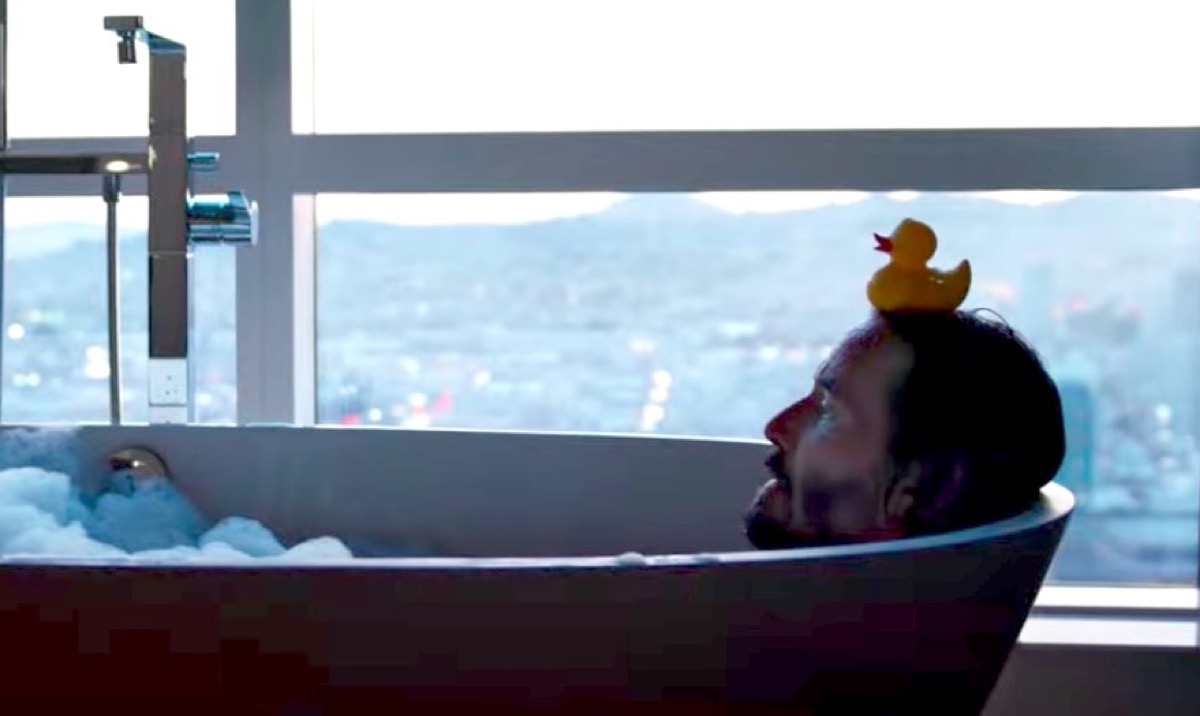
Nonetheless, this film tries, and it tries hard. The plot is at least somewhat novel. The first scene is one of the better ones, introducing us to both Bugs (played by Jessica Henwick) and a sort of alternate version of Morpheus (Yahya Abdul-Mateen II). Without giving too much away, we are then reacquainted with Neo/Thomas Anderson (Keanu Reeves) who appears to be living in The Matrix as a video game designer and has committed all those amazing events from the films into a wildly popular video-game. Unsurprisingly, things aren’t as they seem. Neo appears to have been brainwashed into thinking the events of the previous films never occurred in “real-life”. Bugs and Morpheus go on a mission to convince him otherwise. This is all spliced with scenes between Neo/Anderson and his therapist, played by Neil Patrick-Harris (the less said of his role, the better). Of course, there is also some strange interplay between Neo and Trinity (played by the serene Carrie-Anne Moss). Trinity (called Tiffany in The Matrix) doesn’t seem to have any memory of those previous events either.
A fundamental problem with Resurrections is the absence of tension throughout. When Neo is later presented with the blue pill/red pill conundrum again, we know what he will do. But the film drags it out anyway. When it seems unclear whether Tiffany/Trinity will remember Anderson/Neo, we know the impending result. In the same vein, the film also brings back the worst elements of its fight scenes. There is not a great deal at stake when we watch Neo fighting Agent Smith (Jonathan Groff, doing his best). We’ve seen that fight a hundred times. They all end the same. It becomes quite easy to switch off in these moments. For a film that is supposed to spawn such gargantuan, jaw-breaking ideas, it all feels painfully linear. These are roads we’ve been down before.
It’s uncomfortable to say, but very few ideas from this film work in execution. In an early scene, there is a genuinely interesting back-and-forth involving video-game designers discussing The Matrix “game” and the potential for a sequel. They talk about what a sequel should entail, one of them gushes about “bullet time“! It’s a very meta sequence and the scene harbours quite a clever concept. But the dialogue is cringey – even game developers aren’t this lame. Even worse, it ends up sounding a bit like Wachowski lamenting how difficult her job is. After the scene, all you can think is: this film knows its doomed, and it wants you to know it too.
But at least there’s some spark in that interaction. Elsewhere, the script is clunky and sometimes downright embarrassing. Some characters, including Sati (played by the gorgeous Priyanka Chopra Jonas), are just complete dumps of exposition. Neil Patrick-Harris gets some meatier scenes and does the best he can with some very windy monologues, but it’s not easygoing. Reeves, meanwhile, really shows his limits here. In the original film, his wide-eyed Californian dopiness felt suited because he was having his mind blown alongside the audience. Here, however, it’s just a bit sad and he comes across as frustratingly blank. In fairness to Reeves, he occupies a very difficult role trying to reintroduce a character grappling with mind-exploding concepts in a realistic way. He’s just not capable of pulling it off.
Really, the only actor who increases his stock from this film might be Abdul-Mateen II. That is doubly shocking, given he has the unenviable task of replacing Laurence Fishburne. Fishburne was excellent in the super-serious, humanity-is-at-stake role with his booming, apocalyptic voice and his internal struggle to find The One. It’s a credit to his successor that we’re hardly left yearning for anyone else in this film. This Morpheus is a bit lighter and more circumspect than Fishburne’s, but Abdul-Mateen II still has an incredible baritone hum and a real physical presence. Naturally, then, he disappears for the middle third of the film and is relegated to some sort of cameo-cyborg in the final third. He’s sorely missed.
The fight scenes are fine without ever being astounding. But I am not one to subscribe to the theory that The Matrix‘s combat scenes were ever its calling card. The exception is the final “battle”, which is so ludicrous and heavy on pyro-technics that you just sit back and think: huh? Similarly to the scenes in Zion from the sequels, Neo also visits a new city of Io where Ziobe (Jada Pinkett-Smith in terrible makeup) is some sort of mayor. These scenes (like those from Zion) are just not engaging and feel more like the worst parts of The Phantom Menace. They only contribute to the bloated runtime.
It is supposedly possible to make a good Matrix sequel. BladeRunner 4020 managed a similar feat. But whereas that film was willing to let its ideas simmer a little more, Resurrections feels the pressure of its own moment. The original Matrix had a gritty, noir-ish, tense atmosphere tinged in a pale green that made it feel truly gripping. This film has none of that. It talks listlessly about concepts of hope and despair, and the idea that humans feel more comfortable when they’re miserable is a legitimately interesting and prescient idea, but it’s not executed upon with any verve or grace. Resurrections is a bit too afraid to be its own film and let itself breathe. In the process, it’s not much of a film at all.
 THE MIDNIGHT SPECIAL