
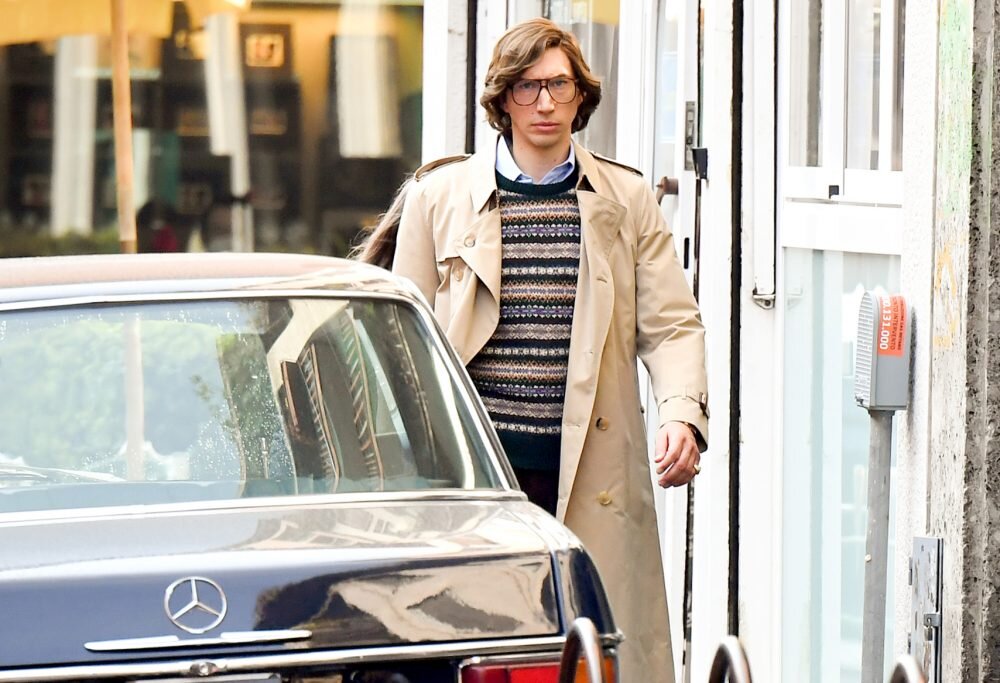
Far from a disaster of a movie. But also not half as enthralling as it seems to think it is. The House of Gucci is a film that needed its director, and its actors, to stop for a second and wonder: what are we actually fucking doing?
Everything about The House of Gucci screams epic blockbuster film. A captivating cast; gripping (true) story; an intriguing subject. Americans, playing Italians, speaking in weird Italian-American accents without justification. It’s not all that hard to wonder what drew director, Ridley Scott, to the source material. And so, we’ve come out the other side with a 2 hour, 38-minute epic that sadly resembles more tele-movie than The Godfather.
But it starts well. We are introduced to Maurizio Gucci (Adam Driver), a mild-mannered, subdued young man studying law and (as we learn) a reluctant heir to the Gucci brand. He fortuitously meets the saucy Patrizia Reggiani (Lady Gaga) at a party, and the two begin a believable romance, albeit much to the chagrin of Maurizio’s wary father (played by Jeremy Irons).
We’re also later introduced to Maurizio’s uncle, Aldo Gucci (Al Pacino), and his son Paolo (Jared Leto… in somewhat ridiculous makeup and costume). Aldo, who appears to be the lone commercially savvy member of the Gucci family, eventually takes the quiet, likeable Maurizio under his wing and rejects the bumbling Paolo. But the heart of the story revolves around the snaking relationship between Maurizio and Patrizia.
Over the film’s bloated run-time, we’re treated to gorgeous Italian vistas and interiors, immaculate suits (Driver, in particular, is a pleasure to watch in Gucci attire). Patrizia looks fantastic in near-every scene and Gaga does her best Sophia Loren impression in many of them. One of the joys of this film is its look, although it would have been disappointing to receive anything less in a film about a fashion powerhouse.
So, how does this supposed slam-dunk blockbuster falter? It’s a bit of a tonal mess. We’re treated to a phenomenal cast, but each actor/actress appears to have come to the film from a different era. Even if the intention was to be a bit outlandish, the result is disorienting.
Plenty is placed on Gaga’s shoulders in particular. Her character drives the drama and passion of the story (truly, there wouldn’t be much scandal if she wasn’t involved). It is too much for her. Almost on a dime, the playful romance between her and Driver goes south. She becomes a complete tormentor, without it ever really being clear what drives her motives. By the film’s midpoint, she has gone completely off the rails and you wonder how the apparently-perceptive Maurizio didn’t come to realise she was certifiably insane long before they married. It can also be a bit distracting when her accent goes from raspy Italian to some sort of painful, frosty Russian dialect.
Driver is left in a bit of a bind, playing the subdued lead who occupies a bit of a Michael Corleone figure. But he generally fares well, even if his character does not have anywhere near as much to play with as some of the others. Pacino, unsurprisingly, sweeps the whole cast. He’s entirely believable as the commercial head of Gucci, at times scary and at other times funny. There’s also a quietly great cameo by Reeve Carney (playing Tom Ford), although at least Carney had the benefit of not having to fashion a comical Italian accent.
And there’s Jared Leto, playing less a human than a character from Super Mario Bros who has freakishly come to life in some sort of radioactive disaster. As soon as Leto’s first sentence, you’ll realise he decided to play that kind of character. It seems doubtful that the real Paolo Gucci had any resemblance to this character, largely because no human who has ever graced this planet bears a resemblance. It is like Leto, fresh off having lived on Saturn for a few decades, has had the idea of an Italian man described to him by a Greek.
All that said, it is difficult to fault Leto entirely. Rather, it’s the film’s wrestle with its tone that is more to blame. Leto (and, to a slightly lesser extent, Salma Hayek in a cameo role) clearly chose to take a fantastical approach to the character, but that doesn’t really mesh with the rest of the film. In particular, it doesn’t mesh with the supposedly dramatic romantic chess-match between Maurizio and Patrizia and high-stakes of the whole affair.
Really, we never get to sink our teeth into any of the characters. We just traverse locales, the plot develops and curdles, and eventually reaches a fairly underwhelming climax. We’re left wondering what all the fuss was about. It’s somewhat of a surprising misstep for Scott, who doesn’t seem to have extracted all the intrigue that he could have from this story, nor has he really used the talents of his cast to great effect. The House of Gucci is not a terrible film, but the greatest indictment I can give it is that, about two-thirds through, I wanted it to just end.
 THE MIDNIGHT SPECIAL